The Art of Living by Making Art

Jewellery inspired by nature and made by hand.
How I make it, why I make it, the challenges I face and the successes that come my way.

Saturday, January 21, 2012

Blogging Blues


I really like the idea of a blog - a diary that is public - two extremes of the spectrum coming together and becoming something new and different. There are some great blogs - well written, beautifully designed, great pictures and posted often, but I don't think mine is among them. When I started it I was dipping my toe in the online waters to see how I would like the temperature, and while I kinda like it, I don't like it enough to really want to stay in it. So this will probably be my last post on this blog. My thanks go to the people who cared enough to become a "follower" and my special thanks go to Sylvia who always has had something very encouraging to say to me.


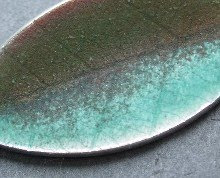
I'll leave with a picture of a brooch I finished recently in silver, copper and enamel.

Wednesday, September 28, 2011

Etching Silver


I have been interested in the idea of etching silver for a couple of years now and finally this week I actually did it. So for anyone interested in the technique here's how I went about it, bearing in mind that at this stage I have etched exactly four pieces of silver!


My experience with etching has been limited to etching copper and brass with Ferric Chloride. The chemical that I was interested in using on silver is Ferric Nitrate. The traditional chemical to etch silver has been nitric acid but Ferric Nitrate is safer to use and I have read that it gives a cleaner etch. First I had to source the Ferric Nitrate, with the help of google and a couple of emails to artists I found online I quickly had a source in British Columbia - xenexlabs .com. Surprisingly they shipped it to me through the regular mail, it was $78 for 500g, plus tax and shipping. The chemical comes as greyish-mauve crystals.


I contacted Ontario jeweller and metalsmith Sandra Noble Goss for some notes on dilution strength which she kindly emailed me back right away. It appears that you can alter the dilution of the crystals depending on how long you are prepared to wait for the metal to etch. Since I had bought 500g I decided to make up half of that and keep the rest of the crystals for another batch later on. I used a small tupperware container which 350ml of water filled nicely. I added my 250g Ferric Nitrate crystals to the water and stirred until they were dissolved - I used warm tap water. According to Sandra's notes I could have used a stronger solution or a weaker one (1:1 water to crystals or 2:1), I simply chose the proportions that best fit my container and the amount of crystals I had bought.


I prepared my silver the same way as one would prepare copper or brass for Ferric Chloride etching ie starting with clean metal, the design applied in PnP blue transfer paper, the back and sides taped off with packing tape. If you don't have the PnP paper you can use an oil-based paint pen to draw on the metal, however I would recommend PnP paper above anything else - enamelworksupply.com has it and many other places I am sure.


It is necessary to suspend the prepared metal in the Ferric Nitrate solution and it must be upside down so the residue can fall out. I taped fishing line to the back and then taped the lines to the edge of the tupperware container pulling it tight enough so the piece is submerged but not touching the bottom, then put the lid on. I got a very good etch in 4hrs at this strength of solution. When you take it out put the piece in a bowl of water with baking soda in it and rub more baking soda directly on the piece, scrub well. This will neutralize the Ferric Nitrate and clean off the greyish film. The PnP residue can be sanded off or removed with acetone. There, you should have a lovely piece of etched silver ready to make into something beautiful.


Safety First: wear an apron and gloves and safety glasses, don't get the solution on your skin or clothes. When making up the solution I worked under a fume hood to be on the safe side, while the etch was working I had a lid on the container. Always use baking soda to neutralize. The solution can be used over again - as I have only just started I don't know how long it will work for, eventually it will wear out. The best disposal recommendation would be taking it to a toxic waste specialist.


If you have already etched with Ferric Chloride these notes should be enough to help you start with Ferric Nitrate. If you have never etched I would recommend you see a demo first as written notes are really just an addition to watching it done. If you have questions though, I'll try and answer them. Also if you can get Linda Darty's book The Art of Enameling, she covers the process in there quite well.

Monday, September 5, 2011

Bragging!


Earrings in sterling silver and enamel


Is it ok to brag about your own work really? To blow your own trumpet and say how great your work is? Well, what I am really saying is that I made these earrings and I really like them, I don't think I could make them any better.


Actually I think it is a very useful skill to be able to critique your own work. So here goes... I love these earrings for their slightly unusual shape - not complex but not exactly straightforward either. I love the pattern - a classic Japanese chrysanthemum pattern, and the scale of the pattern is exactly right for the size of earring. I especially love this green enamel - Thompson's unleaded Grass Green, which by the way is the easiest, most forgiving colour to work with on sterling. I also think that the plain silver, slightly textured domes work well as a counterpoint to the coloured enamel.


So, I am not really bragging just sighing with relief that a piece of jewellery went right for a change. Believe me I have a box of rejects waiting to be de-enamelled and re-fashioned or simply thown in with the scrap. After all if you cannot critique your own work how will you ever realise what went wrong with it?

Sunday, August 21, 2011

Summer Time


Why is summer so busy?


There are so many things that I want to do including continuing to make jewellery that this blog has most definitely fallen by the wayside. My husband and I went away for five weeks to the UK to visit my family (picture above is taken on the Isle of Wight) and I just never caught up when I came home.


Every winter I always picture myself enjoying long lazy days in summer, promising myself that there will be outdoor sketching days, pure designing days, experimental metal work days, days for new enamel ideas, and on and on. It never seems to happen that way does it?


I have actually sold a lot of work this summer which is good of course, but what happens next is that I have to make more inventory and as I am only one person not a factory it seems to take forever. Cranking pieces out with no thought for their quality is not what I want to do, so I continue to work painstakingly on each piece - can't do it any other way.


In addition, I am working on some interesting 'things' in enamel - not jewellery - as part of a possible commission. I won't say any more except "watch this space" for further details! Now if you'll excuse me I have to go and continue weeding my garden.

Monday, June 13, 2011

Insurance woes


Peacock green enamel on silver, choker length necklace.

Calling all jewellery artists who have a home based studio - are you having insurance difficulties?
For years I have insured my home-based jewellery business as an add-on to my house insurance. This year the company said they would no longer insure me. That is, they would not insure the business nor the house.

Reasons given were mainly for liability issues, especially because I was selling online and customers could be anywhere in the world, also I have customers coming to the studio in person to discuss custom pieces. My torch was an issue too, although it never has been in the past.

I called a couple of other jewellers I know who have home-based studios and incredibly to me they said that they had never told their insurance companies about their business! I think that they are wasting the premiums they are paying by not disclosing their studios. I wanted to be up front about everything I was doing.

I could have bought commercial business insurance for around $1800 a year but I really didn't want to pay that much. So for the last few months both my business and my house have been uninsured as I look around for someone who will take the risk. They seem to think that I have piles of gold and diamonds laying around, customers tripping down the steps and an unattended blow torch left alight!

This morning I heard from the insurance broker, she may have found a company to insure our house, excluding the studio contents, but including business liability at a reasonable price so I am off to see if it will work. Am I crazy to worry about this, should I just leave things to fate?

Tuesday, May 31, 2011

Finding Details

Whenever I visit somewhere new I, of course, take my camera and what I love photographing are architectural details, especially metalwork. I have a series of pictures down the sidebar of this blog. A part of me would love to work in a big scale, I actually took a short welding workshop long ago, but my business is jewellery and for now that is what I am immersed in.

I have just returned from a quick trip to the city of Milwaukee, a place full of very interesting ornate architecture, much built by the origianl immigrants from Germany. These doors were on a theatre we passed walking around the historic Third Ward. I think they are made of copper. As my husband and our friends walked on I just had to stop and get up close to the doors. The copper had a wavy pattern embossed in the metal and I love the patchy verdigris and the large rivet heads!


Happy photographing!


Thursday, April 28, 2011

Consignment Dos and Don'ts

Following up on my last post, here's a list of lots of Dos and a few Don'ts that might help you if you are consigning work for the first time.


  • Do some investigation into the store or gallery. Preferably visit it in person and meet the owner. Or if it is long distance, talk with the owner and ask for pictures of the interior.

  • Do ask for a contract if one is not offered. The contract needs to spell out who is responsible for the work when in the store, who pays for shipping work to and from the store and what is their policy on lost and stolen items.

  • Do ask what the commission split is, when payments are made.

  • Do expect payment in a timely manner.

  • Do keep your own inventory list and check off items as they sell.

  • Do offer to help promote your own work. Send images and artist statements promptly.

  • Do send new inventory regularly as pieces sell. A good display is key to selling well.

  • Do give the gallery at least 6 months to sell anything before re-assessing.

  • Do exchange pieces if they don't sell.

  • Do give gallery 2-3 weeks notice if you want your work returned.

  • Do stop by if the place is local, check your work, offer to clean it and generally be helpful.

  • Do be nice, friendly and reliable to work with.

  • Do be open to suggestions.

  • Do expect politeness, respect and good business practices from the gallery or store.


  • Don't tell the owner how to run their business.

  • Don't complain needlessly - save your complaints for when they are justified. Justifiable complaints include - not being paid in a regular timely manner; owner does not return calls or emails; your work is not displayed; your pieces get lost stolen or damaged.

  • Don't send work off and then forget all about it.

  • Don't hesitate to tell the owner if your inventory list does not match theirs, or if their is a mistake on a payment slip.

  • If your work is not selling at all and you have given it at least 6 months then don't hesitate to take it out, try somewhere else or try a different line of work maybe at a different price point.

Sounds like the artist carries a lot of the weight? Well yes they do, but there is an enormous amount of work involved in running a gallery or store and working to sell art. If you are an artist who makes good work, is reliable and professional to deal with and you come across a gallery owner who is the same then the chances are that you will develop a very good working relationship which will benefit you both.