The Art of Living by Making Art

Jewellery inspired by nature and made by hand.
How I make it, why I make it, the challenges I face and the successes that come my way.

Sunday, August 21, 2011

Summer Time


Why is summer so busy?


There are so many things that I want to do including continuing to make jewellery that this blog has most definitely fallen by the wayside. My husband and I went away for five weeks to the UK to visit my family (picture above is taken on the Isle of Wight) and I just never caught up when I came home.


Every winter I always picture myself enjoying long lazy days in summer, promising myself that there will be outdoor sketching days, pure designing days, experimental metal work days, days for new enamel ideas, and on and on. It never seems to happen that way does it?


I have actually sold a lot of work this summer which is good of course, but what happens next is that I have to make more inventory and as I am only one person not a factory it seems to take forever. Cranking pieces out with no thought for their quality is not what I want to do, so I continue to work painstakingly on each piece - can't do it any other way.


In addition, I am working on some interesting 'things' in enamel - not jewellery - as part of a possible commission. I won't say any more except "watch this space" for further details! Now if you'll excuse me I have to go and continue weeding my garden.

Monday, June 13, 2011

Insurance woes


Peacock green enamel on silver, choker length necklace.

Calling all jewellery artists who have a home based studio - are you having insurance difficulties?
For years I have insured my home-based jewellery business as an add-on to my house insurance. This year the company said they would no longer insure me. That is, they would not insure the business nor the house.

Reasons given were mainly for liability issues, especially because I was selling online and customers could be anywhere in the world, also I have customers coming to the studio in person to discuss custom pieces. My torch was an issue too, although it never has been in the past.

I called a couple of other jewellers I know who have home-based studios and incredibly to me they said that they had never told their insurance companies about their business! I think that they are wasting the premiums they are paying by not disclosing their studios. I wanted to be up front about everything I was doing.

I could have bought commercial business insurance for around $1800 a year but I really didn't want to pay that much. So for the last few months both my business and my house have been uninsured as I look around for someone who will take the risk. They seem to think that I have piles of gold and diamonds laying around, customers tripping down the steps and an unattended blow torch left alight!

This morning I heard from the insurance broker, she may have found a company to insure our house, excluding the studio contents, but including business liability at a reasonable price so I am off to see if it will work. Am I crazy to worry about this, should I just leave things to fate?

Tuesday, May 31, 2011

Finding Details

Whenever I visit somewhere new I, of course, take my camera and what I love photographing are architectural details, especially metalwork. I have a series of pictures down the sidebar of this blog. A part of me would love to work in a big scale, I actually took a short welding workshop long ago, but my business is jewellery and for now that is what I am immersed in.

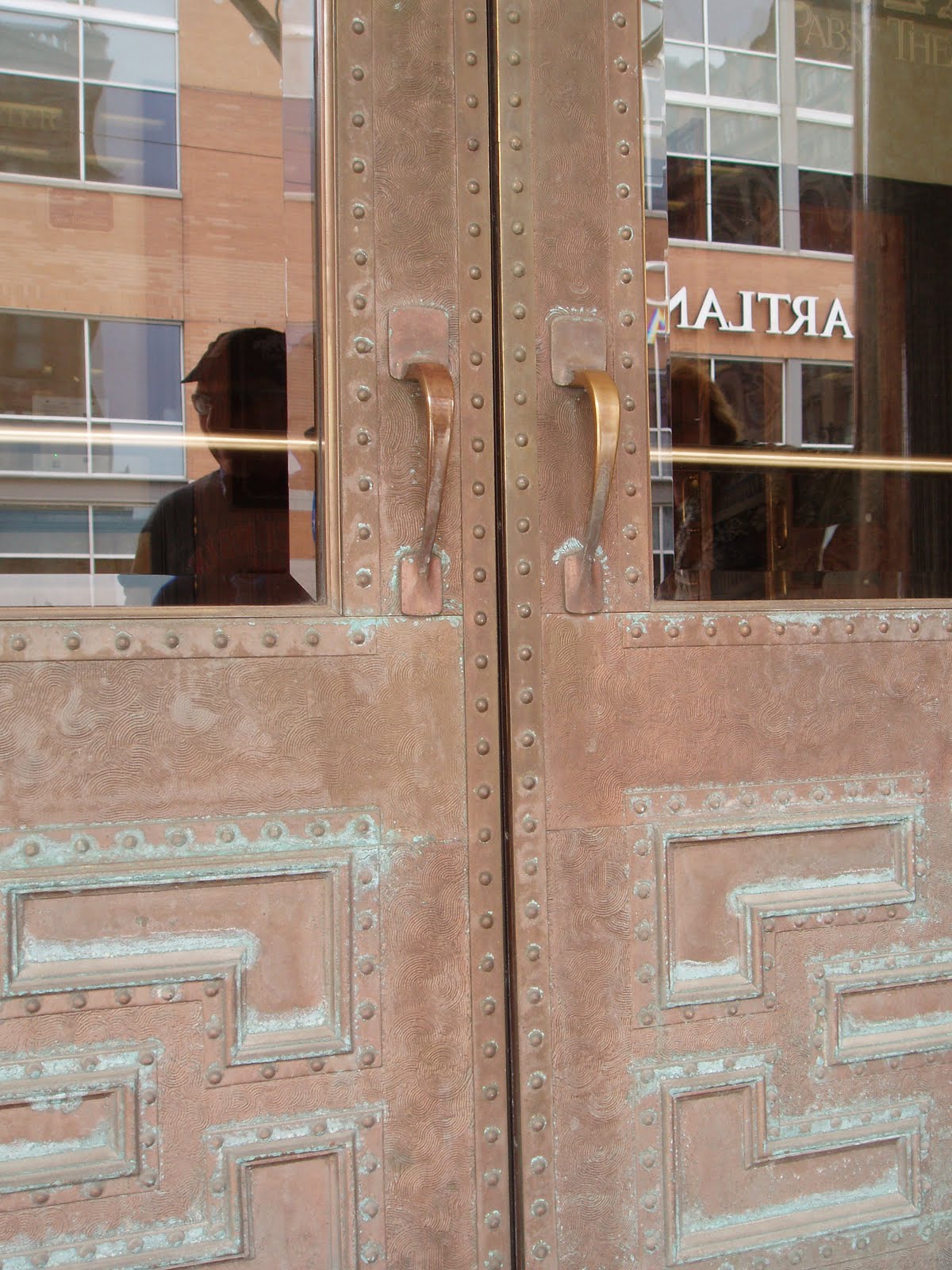
I have just returned from a quick trip to the city of Milwaukee, a place full of very interesting ornate architecture, much built by the origianl immigrants from Germany. These doors were on a theatre we passed walking around the historic Third Ward. I think they are made of copper. As my husband and our friends walked on I just had to stop and get up close to the doors. The copper had a wavy pattern embossed in the metal and I love the patchy verdigris and the large rivet heads!


Happy photographing!


Thursday, April 28, 2011

Consignment Dos and Don'ts

Following up on my last post, here's a list of lots of Dos and a few Don'ts that might help you if you are consigning work for the first time.


  • Do some investigation into the store or gallery. Preferably visit it in person and meet the owner. Or if it is long distance, talk with the owner and ask for pictures of the interior.

  • Do ask for a contract if one is not offered. The contract needs to spell out who is responsible for the work when in the store, who pays for shipping work to and from the store and what is their policy on lost and stolen items.

  • Do ask what the commission split is, when payments are made.

  • Do expect payment in a timely manner.

  • Do keep your own inventory list and check off items as they sell.

  • Do offer to help promote your own work. Send images and artist statements promptly.

  • Do send new inventory regularly as pieces sell. A good display is key to selling well.

  • Do give the gallery at least 6 months to sell anything before re-assessing.

  • Do exchange pieces if they don't sell.

  • Do give gallery 2-3 weeks notice if you want your work returned.

  • Do stop by if the place is local, check your work, offer to clean it and generally be helpful.

  • Do be nice, friendly and reliable to work with.

  • Do be open to suggestions.

  • Do expect politeness, respect and good business practices from the gallery or store.


  • Don't tell the owner how to run their business.

  • Don't complain needlessly - save your complaints for when they are justified. Justifiable complaints include - not being paid in a regular timely manner; owner does not return calls or emails; your work is not displayed; your pieces get lost stolen or damaged.

  • Don't send work off and then forget all about it.

  • Don't hesitate to tell the owner if your inventory list does not match theirs, or if their is a mistake on a payment slip.

  • If your work is not selling at all and you have given it at least 6 months then don't hesitate to take it out, try somewhere else or try a different line of work maybe at a different price point.

Sounds like the artist carries a lot of the weight? Well yes they do, but there is an enormous amount of work involved in running a gallery or store and working to sell art. If you are an artist who makes good work, is reliable and professional to deal with and you come across a gallery owner who is the same then the chances are that you will develop a very good working relationship which will benefit you both.


Saturday, April 16, 2011

Selling on Consignment


Cobalt blue enamel on fine silver.


Since I began selling my jewellery 12 years ago I have sold in various ways - craft show, wholesale show, consignment in a store or gallery, direct from studio (including online sales) and by commission. I figured that I should try every way of selling until I found the way that suited my business best.


I have sold on consignment at approximately 15 different places from craft stores to jewellery galleries. Here are a few thoughts on selling by consignment...


  • 'Consignment' is also known as 'sale or return' and it is when the artist places a number of their pieces for sale in a store or gallery owned and operated by another party. The artist retains ownership of the pieces until they are sold to a customer, at which time the artist is paid by the store owner. The store owner takes a 'commission', a % of the sales price.

  • This commission could be anything but in my experience it varies from 35% to 50%. Some high-end galleries may take more. The commission covers all the expenses of retailing from paying sales staff to providing wrapping for the pieces.

  • Selling on consignment leaves the artist free to make art and not worry about the business of selling and running a retail space. Especially vauable if this is not your strength and you find a good retailer.

  • With co-operation from the retailer the artist can also use the store or gallery to test the market for different pieces, arrange small shows and presentations of new work.

  • In my experience the best sales come from the best relationships (between artist and retailer)and the best relationships develop from mutual understanding and good communication. These things usually have to be worked at!

  • Many artists grumble that with consignment the retailer is taking no risk with inventory, all the risk is taken by the artist. This is true of course, but can be mitigated somewhat if the retailer pays promptly for sales.

  • Local retail outlets mean that you can check on your pieces - have they been moved, are they clean, are they displayed well, is inventory low? Long distance consignment requires far more trust in the retailer.

  • If sales have been good and then suddenly drop off look into it right away, it could be a warning that things are not right with the store or gallery. This could be anything from it going out of business to it being so crowded with work that yours has been shoved out of sight.

  • A contract with the gallery is a good idea, spelling out who is responsible for what and when cheques are sent out. Usually the pieces are insured in the gallery by the owner of the gallery and they are responsible for the work. Shipping work to the gallery is usually paid by the artist, shipping unsold work back is paid by the gallery. Most galleries pay out monthly, in the month following the sales month. If a gallery is constantly late with payment or often gets the payments wrong another warning bell should go off in the artist's head. The policy on lost or stolen items, and returned items is important to know.

  • If things go really pear-shaped what can you do? If work has been sold and you haven't been paid, it can be a difficult situation, more so if the store is in another part of the country. This has happened to me and many other artists when Object Design gallery in Vancouver folded a couple of years ago after the owner pocketed money owed to the artists. Some of us launched small claims suits, some talked of hiring a collection agency. After considering the options I decided to take the loss.

  • As of now I have work on consignment in two places. One is local and is the first store I ever consigned work with, it is far and away the best place to sell my work and the owner has become a good friend over the years. Mutual respect and commitment has been beneficial to both of us - I hope it continues a long time.

This is a long post, so I'll continue it next time with a list of dos and don'ts for consigning work. Meanwhile Happy Selling!

Thursday, March 31, 2011

Calling all art students


Once a year I get asked to return to the school where I studied jewellery-making - Kootenay School of the Arts - to give a slide show and talk to the students about moving from being an art student to being an art business owner. As April is just about upon us and students will be graduating in a few weeks I thought I'd share with you my top ten tips on this subject.


  1. Work hard.

  2. Establish a routine of regular working hours, tell everyone you know, repeat it continually.

  3. Buy a camera, learn how to use it and make a photo booth for your work.

  4. Start selling locally, move further afield as you become experienced.

  5. Try different things - you won't know if it works until you try it.

  6. Book-keeping - do your own, then you'll know what is coming in and what is going out.

  7. Artistic work feeds commercial work - do both if you can.

  8. Be reliable and nice with everyone - customers, gallery owners, suppliers etc

  9. Show off your art - wear you own handmade jewellery, clothing, accessories.

  10. When you can afford it, go to a workshop or conference, for creative renewal and networking.

I have tried my best to do all of these things and my hand-made jewellery business will be 12 years old this year. Here's a photo of a brooch I made in my early years - Oak Leaf in sterling silver, 14k gold and acrylic.

Wednesday, March 23, 2011

Buttons

Enamel and silver buttons

A little taste of what I have been working on lately - some functional silver and enamel buttons. Most of them are constructed with both fine and sterling silver. I use the fine silver if possible for the enamelled parts and then the sterling for strength of construction. This palette of enamel colours always seems to fire easily and without problems, and I love these shades.

Ever since I was about eleven years old and picked up an old tin of buttons at a jumble sale I have always had a liking for these functional but pretty things. After I learned that buttons were originally purely for decoration, essentially sewn on brooches - buttonholes weren't invented until later - I had a resurgence of interest in them and decided to make some of my own.

Maybe it is because I am working in enamel a lot now, but I keep finding more things to do with enamelling - organisations, jewellers, museums, exhibitions and so on. I just joined Grains of Glass - have a look at their site, there is link to it on my side bar. Perhaps we are at the start of a new blossoming in the art of enamelling? I hope so, Happy Spring!